Showing posts with label BC. Show all posts
Sunday, November 16, 2014
Wednesday, November 5, 2014
Thursday, October 30, 2014
Tuesday, October 21, 2014
Saturday, September 27, 2014
Heerman's Gull-A-Palooza
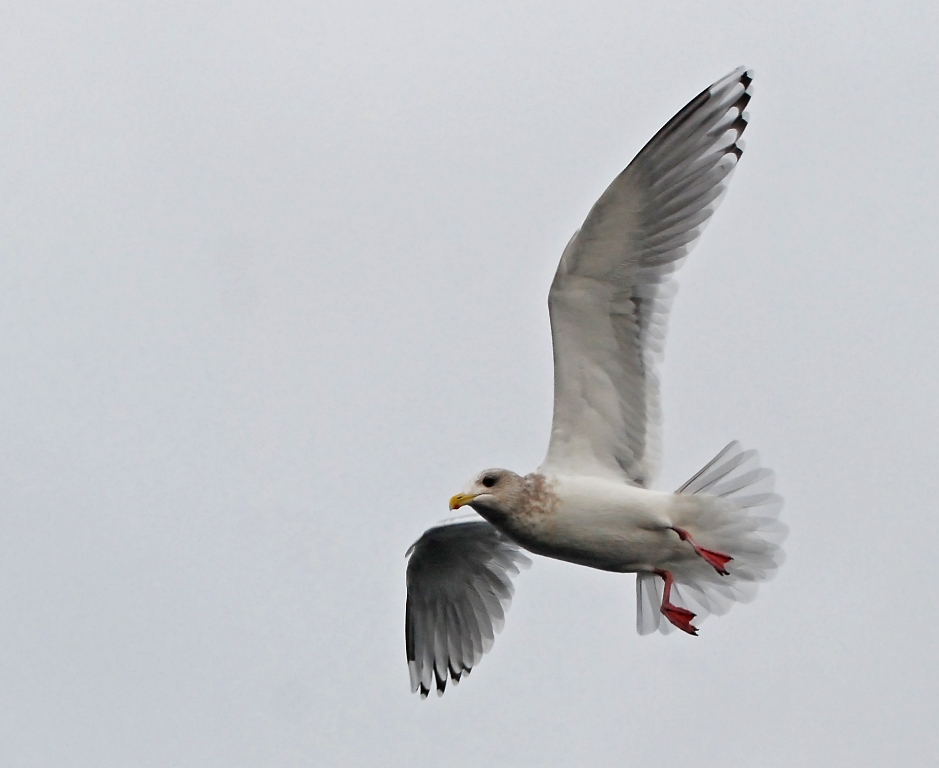
Last week Victoria birder Daniel Donnecke reported 100 Heerman's Gulls from Flora islet near Hornby Island. I assumed it was a typo, and forgot about it, as even one Heerman's Gull in these waters is noteworthy. Others then began questioning the sighting. One hundred Heerman's Gulls in the Salish Sea? Really? Well, yes, really! Daniel not only accurately reported what he had seen, he also took photos of large groups of Heerman's Gulls roosting on rocks. Wow! What a sighting!
On Friday the 26th, Donna and I had some time in the morning so we checked all of the spots around here where Heerman's Gulls have been seen in thee past. We were not disappointed. And had we searched on a better tide, and on a day without driving rain, I have no doubt we would have seen more. The numbers up here right now are unprecedented.
In 4 hours we saw 108 adults and 9 immatures, for a total of 117 Heerman's Gulls.
Rathtrevor: 2 ad.
Englishman Estuary: 1 ad.
Parksville Bay: 0
French Creek Marina: 2 ad.
Columbia Beach: 3 ad. 1 imm.
Beach Creek: 5 ad.
Brant Viewing Stand: 22 ad. 2 imm.
Little Qualicum Estuary: 3 ad.
Big Qualicum: 0
Qualicum Bay: 0
Nile Creek: 54 ad. 6 imm.
Bowser Rd. 0
Jamieson Rd: 0
Shoreline Dr: 16 ad.
Deep Bay: 0
Today, I noticed an adult Heerman's Gull feeding in a large flock of California and Bonaparte's Gulls off Vesper Point. This is the third sighting of a Heerman's Gull for Moorecroft Regional park. There seems to be an amazing number in the central part of the Salish Sea right now.
Mystery Underwing Moth
On the night of September 14, 2014, we surprising large numbers of a very large moth fluttering about the porch light here at Moorecroft Regional park, in Nanoose Bay, BC. Watching them for a few moments, I felt that it was a species that I couldn't recall having seen before. Later in the evening, I realized that several must have come in when I had the door open, and were now noisily bumping into lamp shades around the house. As large as they were, it didn't take long to capture them and release them outside. Curious as to the species, I photographed one, thinking I could identify it later. Well, I should have known better. After sending the photos to quite a few different people, there was no consensus as to what the species was, although Catocala semirelicta and Catocala unijuga were the most commonly suggested species. Reading about the abundance, distribution and habitat preferences of the two moth species, it seems that semirelicta is more likely. Next time, I'll make sure and wait to release the moth AFTER it has been identified.
Wednesday, September 10, 2014
Flicker Wave
Northern Flickers are common enough year round here on the east coast of Vancouver Island, that it is easy to forget that they are actually migratory in much of this province, as well as Alaska and the Yukon. If one pays attention though, migratory waves of this species do occur, especially in Autumn, as the snow begins to fall in the far north.
In Moorecroft Regional Park, Northern Flickers do nest, but in low numbers. As far as I have been able to determine, there are only two breeding pairs occupying the 34 hectares within the park boundaries. Thus, except for the period right after fledging, or during a migratory wave, one rarely encounters more than a couple of Northern Flickers on a walk in the park.
On the morning of September 9, 2014 I was doing my morning walk around the park, and stopped in at Skipsey Pond to see if any migrants had flown in overnight. Checking the thickets of red-osier dogwood around the pond, I found a few Yellow-rumped Warblers, Black-throated gray Warblers, Warbling Vireos, and my first Ruby-crowned Kinglets of the fall. I also heard a lot of woodpecker activity in the snags that surround the pond. It took no time at all to spot a few of each of the five common woodpecker species here. And everywhere I looked, there were Northern Flickers. In the end I counted 17 of them around the small pond. A very impressive number for such a small area. Several hours later when I had finished my park rounds, the number had grown to 54 Northern Flickers, the highest count I have ever had in this park.
Returning home for breakfast and switching on the radio, reports of snow across the Yukon, northern BC, and even as far south as Calgary, made me wonder; Was it simply the time to head south, or were the large number of migrants all of a sudden triggered by the first snows of the season? Only the Flicker knows.
In Moorecroft Regional Park, Northern Flickers do nest, but in low numbers. As far as I have been able to determine, there are only two breeding pairs occupying the 34 hectares within the park boundaries. Thus, except for the period right after fledging, or during a migratory wave, one rarely encounters more than a couple of Northern Flickers on a walk in the park.
On the morning of September 9, 2014 I was doing my morning walk around the park, and stopped in at Skipsey Pond to see if any migrants had flown in overnight. Checking the thickets of red-osier dogwood around the pond, I found a few Yellow-rumped Warblers, Black-throated gray Warblers, Warbling Vireos, and my first Ruby-crowned Kinglets of the fall. I also heard a lot of woodpecker activity in the snags that surround the pond. It took no time at all to spot a few of each of the five common woodpecker species here. And everywhere I looked, there were Northern Flickers. In the end I counted 17 of them around the small pond. A very impressive number for such a small area. Several hours later when I had finished my park rounds, the number had grown to 54 Northern Flickers, the highest count I have ever had in this park.
Returning home for breakfast and switching on the radio, reports of snow across the Yukon, northern BC, and even as far south as Calgary, made me wonder; Was it simply the time to head south, or were the large number of migrants all of a sudden triggered by the first snows of the season? Only the Flicker knows.
Thursday, September 4, 2014
Return To Sandy Island
One of my favorite birding sites in the Vancouver Island region, has always been Sandy Island Provincial Park, or as it is known now, Jáji7em and Kw’ulh Marine Provincial Park. I have great memories of dozens of day trips and overnight camping trips to this large, partially wooded sand spit off the northern tip of Denman Island. Oddly enough, I hadn't been there in about 5 years. Difficulty in accessing this site, being the chief reason. In the past, one either had to own a boat, or do a moderately long hike in from Denman Island. Given the rising BC Ferries ticket prices, even getting to Denman Island has become expensive. A new, and slightly more affordable option was discovered by Sandy McRuer recently. We chartered a water taxi out of the Comox Marina, with a company called Scubashark. With 5 people, the cost was about $55 per person. Although the landing and departures at the island could stand some improvement (jumping off the bow into the water and wading ashore) it worked quite well, and I would highly recommend Scubashark to other birders looking for a way to access this excellent birding site.
http://www.scubashark.com/Water_Taxi.html
We (Sandy, Don, Shelley, John and I) left the Comox Marina at about 8:40, and by 9:00 we were already birding. We spent the next 6 hours walking around Sandy Island, sometimes as a group, and sometimes by ourselves. We didn't bird all that intensively, and spent more time enjoying the looks at what we did discover, rather than rushing around looking for new ticks. With the leisurely pace, we were only able to explore one of the three Seal Islets, which would have undoubtedly increased the number of species seen. Still though, a completely enjoyable day out with some wonderful folks, and a few really great looks at birds one doesn't encounter here all that often. For me, the highlight of the day was a juvenile Pacific Golden-Plover that circled us and almost landed at our feet. The close up views of this bird in flight were spectacular, and although I've seen many of these birds in the past, this was the most amazing viewing I have ever experienced. This is the type of thing I look forward to at Sandy Island. We ended up recording 56 species on Sandy Island, and another 6 from the boat, for a 62 species day.
Species Recorded from Sandy Island: 56
Canada Goose
American Wigeon
Mallard
Northern Pintail
Harlequin Duck
Surf Scoter
White-winged Scoter
Black Scoter
Common loon
Horned grebe
Red-necked Grebe
Pelagic Cormorant
Great Blue Heron
Turkey Vulture
Merlin
Black-bellied Plover
American Golden-Plover
Pacific Golden-Plover
Semipalmated Plover
Killdeer
Greater Yellowlegs
Black Turnstone
Sanderling
Wetsern Sandpiper
Least Sandpiper
Baird's Sandpiper
Short-billed Dowitcher
Mew Gull
Ring-billed Gull
California Gull
Glaucous-winged Gull
Caspian Tern
Common Tern
Pigeon Guillemot
Band-tailed Pigeon
Vaux's Swift
Hairy Woodpecker
Common Raven
Horned Lark
Barn Swallow
Chestnut-backed Chickadee
Red-breasted Nuthatch
Bewick's Wren
Golden-crowned Kinglet
American Pipit
Orange-crowned Warbler
Yellow Warbler
Yellow-rumped Warbler
Black-throated Gray Warbler
Common Yellowthroat
Spotted Towhee
Savannah Sparrow
Song Sparrow
White-crowned Sparrow
Purple Finch
American Goldfinch
Additional species recorded from boat: 5
Pacific Loon
Double-crested Cormorant
Red-necked Phalarope
Common Murre
Bonaparte's Gull
Northwestern Crow
Saturday, May 17, 2014
Northern Bobwhite
Although never as exciting as finding a "real" rarity, coming across a seriously out of range bird that is surely an escapee from someones aviary, is nonetheless interesting, and worth noting. Using the example of the Silver Pheasant population in Nanaimo, BC, one never knows when introduced exotics will begin breeding on their own in the wild, and perhaps even establish a lasting population.
While driving to a survey site on Kamp Rd, East of Agassiz, BC on the morning of May 13, 2014, I spotted an unusual bird running alongside the road. With one quick view, I had no idea what it was so I stopped and hopped out with a camera. The bird then emerged atop a pile of sawdust in a blueberry field about 50 feet off the road. Now having a clear view of the bird, I was even more surprised. A Northern Bobwhite! Really? This is an eastern species, that does not wander much out of its range. And although there are a couple of small populations east of Ontario, there are none that I know of anywhere close to the upper Fraser Valley, although there was apparently a small population of introduced birds on the Fraser Delta at some point, but they were supposed to have died out many decades ago.
So, where did this bird come from? Generally, birds like this originate from a person who keeps exotic birds as pets, breeds them for sale, or for use in the training of hunting dogs. I have seen many Chukar over the years on Vancouver Island that were lost by dog trainers, but a Northern Bobwhite in BC is a first for me.
Wednesday, May 7, 2014
Sooty Grouse
The hills surrounding the Fraser Canyon are alive with the hooting of male Sooty Grouse right now. Working above Emory Creek this morning, we encountered quite a few displaying male Sooty Grouse on rock outcrops and openings in the forest.
Tuesday, February 19, 2013
California Gulls Return
There are large numbers of California Gulls passing NW over Moorecroft right now. Probably due to the unsettled weather, they are passing quite low over the park and they are vocalizing continually, which is typical when these birds migrate at lower elevations in the dark. It will be interesting to see if this movement continues after sunrise.
Some years, we see massive numbers of California Gulls moving into the Salish Sea at this time of year, searching for the herring spawns which help fatten the birds for their long migration to the prairies.
Tuesday, January 15, 2013
Red-flanked Bluetail
Today I got out of bed at 03:30 so I could catch the first ferry to Vancouver to see the latest spectacular rarity in what is becoming a winter of spectacular rarities. After seeing the Citrine Wagtail in Comox, I thought it would be a decade or so before I saw a bird so unexpected, or beautiful. What a shocker to receive a message yesterday that a Red-flanked Bluetail had been reported from Queens Park in New Westminster. A Red-flanked Bluetail??? Although they have occurred in the western Aleutians a handful of times, and once on an offshore island in California, this is not a species expected anywhere in mainland North America. But the initial report was convincing enough that several of Vancouver's top birders headed out to New West, and in o time at all the chat groups were abuzz with the news. A Red-flanked Bluetail was indeed flitting about under the cedars in snowy Queens Park. I knew I had to go. As soon as possible.
So off I went at zero dark thirty. Only to arrive at the Duke Point Ferry and learn that the first sailing of the day had been cancelled. AGHHHH! Sometimes living on this island can be exasperating. I was not to be deterred though. I turned around and headed back to Nanaimo, and caught the 06:30 ferry out of Departure Bay. This got me to New Westminster about two hours later than I had hoped to get there, but it didn't end up mattering very much, because it took only a few minutes to find the bird. As most of the park is covered in snow, all one needs to do is pay attention to the bare spots under the cedar trees. The birds is feeding on the ground in these bare spots, and although it does move frequently, if one stays in one spot and pays attention, the bird is fairly easy to follow around the park. Unfortunately, some folks were a little overzealous today (seemed to be more a case of little field experience and too much excitement rather than malicious intent) and the bird was being pushed from spot to spot. When the crowds got a bit too dense for me, I moved on and headed to Vancouver to see a Brambling that had been reported yesterday.
It took about 40 minutes to slide through the busy streets of the lower mainland to the backyard in Vancouver, and about two minutes to locate the Brambling. This was one skulker of a bird though. I saw it probably 15 times over the next two hours, but it never did stop moving, and spent much of it's time barely visible in the blackberry thicket there. It was one of the more spectacular Bramblings that I have ever seen, and was well worth the extra hassle of driving into Vancouver, and then back out again to catch an afternoon ferry back home. I seem to be using the word "spectacular" a lot lately. With birds such as these, it warranted. A Red-flanked Bluetail, a Citrine Wagtail, and Brambling in the same month? SPECTACULAR!
So off I went at zero dark thirty. Only to arrive at the Duke Point Ferry and learn that the first sailing of the day had been cancelled. AGHHHH! Sometimes living on this island can be exasperating. I was not to be deterred though. I turned around and headed back to Nanaimo, and caught the 06:30 ferry out of Departure Bay. This got me to New Westminster about two hours later than I had hoped to get there, but it didn't end up mattering very much, because it took only a few minutes to find the bird. As most of the park is covered in snow, all one needs to do is pay attention to the bare spots under the cedar trees. The birds is feeding on the ground in these bare spots, and although it does move frequently, if one stays in one spot and pays attention, the bird is fairly easy to follow around the park. Unfortunately, some folks were a little overzealous today (seemed to be more a case of little field experience and too much excitement rather than malicious intent) and the bird was being pushed from spot to spot. When the crowds got a bit too dense for me, I moved on and headed to Vancouver to see a Brambling that had been reported yesterday.
It took about 40 minutes to slide through the busy streets of the lower mainland to the backyard in Vancouver, and about two minutes to locate the Brambling. This was one skulker of a bird though. I saw it probably 15 times over the next two hours, but it never did stop moving, and spent much of it's time barely visible in the blackberry thicket there. It was one of the more spectacular Bramblings that I have ever seen, and was well worth the extra hassle of driving into Vancouver, and then back out again to catch an afternoon ferry back home. I seem to be using the word "spectacular" a lot lately. With birds such as these, it warranted. A Red-flanked Bluetail, a Citrine Wagtail, and Brambling in the same month? SPECTACULAR!
Saturday, October 20, 2012
Cacklers in Port Alberni
On 18 October, 2012, we encountered app. 350 Cackling Geese in the fields around Port Alberni, hanging out with app. 700 resident type Canada Geese. We also saw two juvenile Greater White-fronted Geese. No Snow Geese or dusky type Canada geese were observed.
Monday, October 8, 2012
Hiking On Gerald Island
Yesterday I rowed out to Gerald Island, here in Nanoose. It is about 1 km out to the Gerald Island shoreline, and takes me about 10 minutes of easy rowing in calm seas, and about 20 minutes of hard rowing in choppy seas with a contrary wind. Yesterday was fairly easy, with winds generally less than 1 knot.
One the way out I saw all three species of cormorants and a few Harlequin Ducks on the large rock at the mouth of First Bay, here in Moorecroft Regional Park. A bit further out, was a single Western Grebe. A fly-by Rhinoceros Auklet was the only other bird of interest on the trip out, or for that matter, on the trip back. The large numbers of Pacific Loons and gulls that have been present the past few days, appeared to have moved on. Other than a few Mew, California, and Glaucous-winged Gulls feeding locally, gull numbers were way down.
The first bird I noticed upon landing on Gerald Island, was am immature Sharp-shinned Hawk. It was in pursuit of a small flock of Pine Siskins. After giving up on catching one of these tiny finches, it flew directly to the shoreline of Vancouver Island, entering the forests of Moorecroft, somewhat below the canopy. I would see two more of this species do the exact same thing over the next two hours. I do not know how they got to Gerald Island, but I suspect they were using the Texada to Ballenas to Gerald route. The other bird of interest I spotted on Gerald Island, was a Northern Shrike, quite contentedly catching grasshoppers along the NW shore of the island. In many Octobers, the grasshoppers would be long gone by the time this migrant from the far north arrives.
Walking on Gerald is interesting. The island is only lightly forested with Douglas firs, red cedars, grand firs, arbutus and trembling aspen. An odd forest composition anywhere in BC. There is also some Rocky Mountain juniper, Saskatoon, ocean spray and Pacific crab apple in the shrub layer, which is places, is impenetrable. Rare coastal plants such as prickly pear cactus and coastal wood fern grow in fair abundance on parts of the island. For the most part though, much of the island is rock which is covered by thin grasses or lichen and moss. A small wetland dominated by red-osier dogwood sits in the center of the island, but because the vegetation is so thick, only the presence of wetland plant species and numerous mosquitos convinces one that there is any water at all on this otherwise dry and rocky island. Most of the shoreline is either sheer rock and short cliffs, or hills of steep rock, making hiking into the interior of the island difficult. There are three places to land a small boat on the island, which lead to routes to reach the center of the island, with varying degrees of difficulty. At it's highest point, it is about 175 meters high, and offers some great views of Vancouver Island, the Sunshine Coast and the surrounding Salish Sea. There is one active Bald Eagle nest on the island. I have read undocumented reports of Peregrine Falcons nesting on Gerald Island as well. I have seen no evidence of this, and decent cliff ledges are in short supply here. Turkey Vultures do nest on the island, on the ground in dense vegetation. The island is well known as a major roost site for Northwestern Crows in the winter. The actual number of crows nesting here can vary quite a bit from day to day through the winter though. With the large amount of open ground and bare rock and grass on the island, it does appear to be an attractive migration stop for the more open country species.
The only presence of mammals on the island, are the numerous runways through the grass, and scat piles from River Otters. Harbor seals and both California and Steller's Sea Lions feed in the waters around the island, but do not appear to haul out here with any regularity. Probably because there are other more appropriate haul out spots nearby.
List of birds noted from Gerald Island on 7 October 2012:
Harlequin Duck: 8
Surf Scoter: 5
Red-breasted Merganser: 2
Common Merganser: 2
Pacific Loon: 32
Common Loon: 2
Red-necked Grebe: 1
Western Grebe: 1
Brandt's Cormorant: 5
Double-crested Cormorant: 11
Pelagic Cormorant: 9
Mew Gull: 22
California Gull: 10
Glaucous-winged Gull: 18
Northern Flicker: 5
Northern Shrike: 1
Northwestern Crow: 3
Chestnut-backed Chickadee: 11
Red-breasted Nuthatch: 5
Brown Creeper: 4
Bewick's Wren: 3
Pacific Wren: 4
Golden-crowned Kinglet: 23
Ruby-crowned Kinglet: 4
American Robin: 12
Varied thrush: 1
American Pipit: 3
Yellow-rumped Warbler: 6
Spotted Towhee: 11
Savannah Sparrow: 14
Fox Sparrow: 9
Song Sparrow: 26
White-crowned Sparrow: 5
Golden-crowned Sparrow: 22
Purple Finch: 4
Pine Siskin: 123
Thursday, September 13, 2012
Moorecroft Census
Today I did a complete census at Moorecroft Regional Park, in Nanoose Bay, Vancouver Island, BC. New birds for the 2012 list in the park were Common Terns, Parasitic Jaegers, and Rock Pigeon. All expected, but only seen for the first time today. Passerine migration continues to be exceedingly slow, but the number of Dark-eyed Juncos has increased substantially in the past few days. The number of Red-breasted Nuthatches locally continues to astonish. I have never seen so many in my 17 years on Vancouver Island.
Canada Goose: 3
Northern Pintail: 18
Surf Scoter: 6
Red-breasted Merganser: 2
Common Loon: 5
Brandt's Cormorant: 1
Double-crested Cormorant: 7
Pelagic Cormorant: 4
Great Blue Heron: 2
Turkey Vulture: 18
Bald Eagle: 1
Sharp-shinned Hawk: 2
Cooper's Hawk: 1
Parasitic Jaeger: 2
Bonaparte's Gull: 47
Heerman's Gull: 1
Mew Gull: 2
California Gull: 16
Glaucous-winged Gull: 31
Common Tern: 5
Rock Pigeon: 1
Barred Owl: 2
Rufous Hummingbird: 1
Anna's Hummingbird: 2
Belted Kingfisher: 2
Downy Woodpecker: 3
Hairy Woodpecker: 4
Northern Flicker: 12
Pileated Woodpecker: 4
Hutton's Vireo: 3
Common Raven: 6
Chestnut-backed Chickadee: 27
Red-breasted Nuthatch: 41
Brown Creeper: 10
Bewick's Wren: 3
Winter wren: 8
Golden-crowned Kinglet: 19
Varied Thrush: 6
American Robin: 15
American Pipit: 3
Orange-crowned Warbler: 1
Yellow-rumped Warbler: 5
Spotted Towhee: 8
Song Sparrow: 4
Dark-eyed Junco: 79
Red Crossbill: 60
Pine Siskin: 43
Sunday, September 2, 2012
Deep Bay Jaegers
Today I spent about 5 hours birding at Deep Bay, which is near Bowser, on Vancouver Island. This site is a great place to observe interactions between terns, gulls and jaegers from mid-August through September. Although there were only about 25 Common Terns and 200 Bonaparte's Gulls, the jaeger action was intense all through the morning. I observed 62 different chases in that time, most of them by Parasitic Jaegers pursuing Bonaparte's Gulls. There was at least one Pomarine Jaeger as well, which is a very good sighting for this site, although by no means the first. The three species of North American Jaegers, as well as South Polar Skua, have all been noted in this area over the years.
Birds observed at Deep Bay on 2 Spetemebr 2012:
Mute Swan x Trumperter Swan hybrid: 2
Canada Goose: 44
American Wigeon: 6
Mallard: 2
Northern Pintail: 17
Green-winged Teal: 10
Harlequin Duck: 3
Surf Scoter: 83
White-winged Scoter: 52
Common Merganser: 6
Common Loon: 7
Red-necked Grebe: 565 (Deep Bay is a major fall molt site for this species)
Double-crested Cormorant: 26
Pelagic Cormorant: 11
Great Blue Heron: 3
Turkey Vulture: 10 (migrating across from Denman Island)
Osprey: 1
Cooper's Hawk: 2 (migrating across from Denman Island)
Merlin: 1
Killdeer: 5
Black Oystercatcher: 2
Sanderling: 1
Western Sandpiper: 24
Least Sandpiper: 2
Baird's Sandpiper: 2
Red-necked Phalarope: 8
Pomarine Jaeger: 1
Parasitic Jaeger: 20+- (estimate)
Bonaparte's Gull: 200+- (estimate)
Heerman's Gull: 1
Mew Gull: 12
California Gull: 26
Glaucous-winged Gull: 51
Common Tern: 20+- (estimate)
Common Murre: 10
Pigeon Guillemot: 6
Marbled Murrelet: 3
Rock Pigeon: 22
Band-tailed Pigeon: 18
Eurasian Collared-dove: 11
Common Nighthawk: 33
Anna's Hummingbird: 1
Belted Kingfisher: 2
Purple Martin: 12
Barn Swallow: 2
American Pipit: 1
Savannah Sparrow: 9
Red Crossbill: 116
American Goldfinch: 2
Birds observed at Deep Bay on 2 Spetemebr 2012:
Mute Swan x Trumperter Swan hybrid: 2
Canada Goose: 44
American Wigeon: 6
Mallard: 2
Northern Pintail: 17
Green-winged Teal: 10
Harlequin Duck: 3
Surf Scoter: 83
White-winged Scoter: 52
Common Merganser: 6
Common Loon: 7
Red-necked Grebe: 565 (Deep Bay is a major fall molt site for this species)
Double-crested Cormorant: 26
Pelagic Cormorant: 11
Great Blue Heron: 3
Turkey Vulture: 10 (migrating across from Denman Island)
Osprey: 1
Cooper's Hawk: 2 (migrating across from Denman Island)
Merlin: 1
Killdeer: 5
Black Oystercatcher: 2
Sanderling: 1
Western Sandpiper: 24
Least Sandpiper: 2
Baird's Sandpiper: 2
Red-necked Phalarope: 8
Pomarine Jaeger: 1
Parasitic Jaeger: 20+- (estimate)
Bonaparte's Gull: 200+- (estimate)
Heerman's Gull: 1
Mew Gull: 12
California Gull: 26
Glaucous-winged Gull: 51
Common Tern: 20+- (estimate)
Common Murre: 10
Pigeon Guillemot: 6
Marbled Murrelet: 3
Rock Pigeon: 22
Band-tailed Pigeon: 18
Eurasian Collared-dove: 11
Common Nighthawk: 33
Anna's Hummingbird: 1
Belted Kingfisher: 2
Purple Martin: 12
Barn Swallow: 2
American Pipit: 1
Savannah Sparrow: 9
Red Crossbill: 116
American Goldfinch: 2
Friday, December 23, 2011
Subscribe to:
Posts (Atom)
.jpg)
.jpg)
.jpg)
.jpg)
.jpg)
.jpg)
.jpg)
.jpg)
.jpg)
.jpg)
.jpg)
.jpg)

.jpg)
.jpg)
.jpg)
.jpg)
.jpg)
.jpg)
.jpg)
.jpg)
.jpg)